
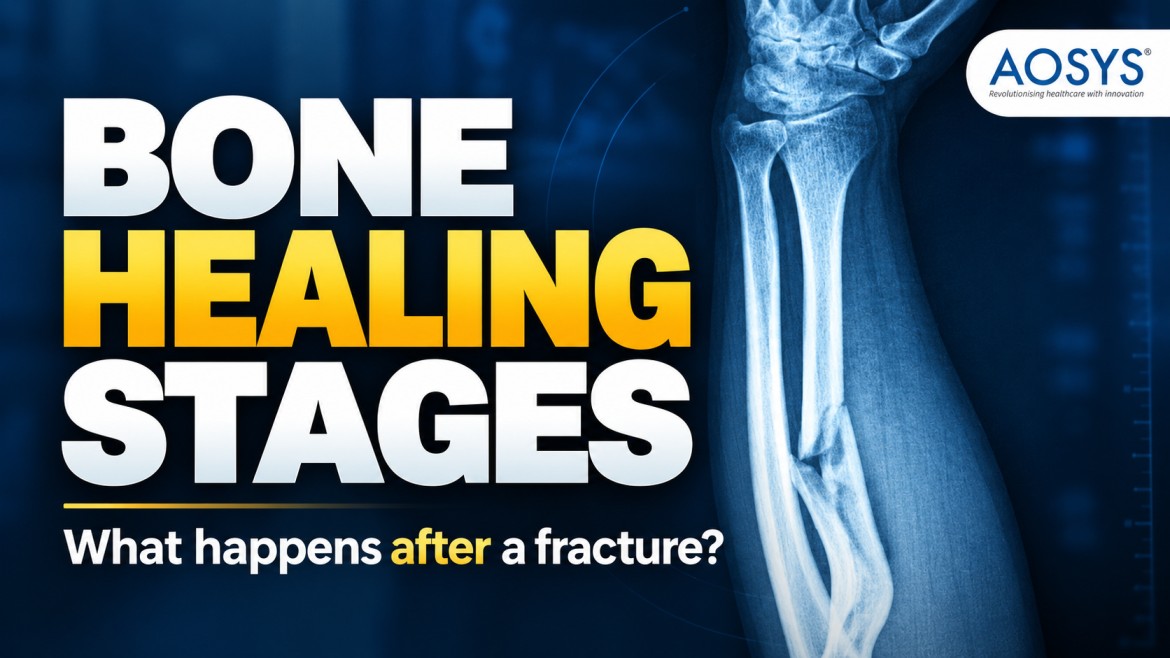
Bone Healing Happens in Three Stages
Healing does not happen overnight, and it does not happen all at once. After a fracture, the body works through a sequence of overlapping stages each one building on the last until the bone is strong enough to carry load again.
Stage 1: Inflammation (the first few days)
Your body rushes blood and cells to the injury site to start the repair process. Swelling and pain in this stage are normal. It’s your body building the foundation for healing.
Stage 2: Repair (weeks to a couple of months)
A soft callus forms around the fracture, gradually hardening into new bone. This is where immobilization casts, braces, or surgical fixation plays a critical role in letting the bone heal correctly.
Stage 3: Remodeling (months, sometimes over a year)
The new bone reshapes and strengthens itself over time, gradually returning to its original form and strength. This stage is slow, but it’s what makes the bone strong again long-term.
The Three Stages at a Glance
Stage one, inflammation, covers the first few days. Blood and repair cells rush to the injury site, and swelling and pain are expected as the body lays the foundation for healing.
Stage two, repair, lasts weeks to a couple of months. A soft callus forms around the fracture and gradually hardens into new bone, with immobilization helping the bone heal correctly.
Stage three, remodeling, continues for months and sometimes over a year. The new bone reshapes and strengthens, gradually returning to its original form and strength.
Habits That Can Slow Bone Healing Down
What you do during recovery matters as much as the treatment itself. Some everyday habits can work against the healing process:
Tobacco and Smoking
Nicotine reduces blood flow to the injured area, which means less oxygen and fewer nutrients reach the bone. Smokers often heal more slowly and have a higher risk of the bone not healing properly.
Alcohol
Regular or heavy drinking can interfere with new bone formation and weaken the body’s repair process. It can also affect nutrition and balance, which raises the risk of another fall.
Poor Nutrition
Your bones need calcium, vitamin D, and protein to rebuild. Skipping meals or eating poorly can hold recovery back.
Talk to your doctor: If you smoke or drink regularly, tell your doctor. Support is available, and cutting back during recovery can make a real difference.
What Supports Healthy Bone Healing?
While there is no shortcut through the stages of healing, a few basics can help your recovery stay on track. Respect immobilization, because casts, braces, or surgical fixation keep the fracture stable so the bone can heal correctly. Eat well, since your bones need calcium, vitamin D, and protein to rebuild new bone. Cut back on habits that slow healing, as smoking and regular or heavy drinking can interfere with healing; tell your doctor if you need support, because cutting back during recovery can make a real difference. Finally, keep your follow-up care, since recovery isn’t linear and follow-up visits are how your care team checks that the bone is mending as expected.
Why This Matters
Recovery isn’t linear, and healing takes real time. Rushing it, skipping follow-up care, or continuing habits that slow healing can affect how well the bone mends. Patience and following your doctor’s guidance closely make a real difference in outcomes.
The Bottom Line
Bone healing happens in stages, not overnight. What you do during recovery matters as much as the treatment itself so give your body the time, care, and support it needs to rebuild.
AOSYS: Supporting Modern Orthopedic Care
At AOSYS, we believe that better orthopedic care begins with knowledge, precision, and continuous innovation.
As an orthopedic implant manufacturer, AOSYS develops implant and instrument solutions designed to support surgeons across a range of orthopedic procedures, including trauma and fracture care.
Through continued product development, engineering, quality, and orthopedic education, AOSYS is committed to supporting the evolving needs of modern surgical practice.
Explore AOSYS to learn more about our orthopedic implant solutions and educational resources for healthcare professionals.
Frequently Asked Questions
How many stages does bone healing have?
Bone healing generally moves through three stages: inflammation, repair, and remodeling. Each stage builds on the previous one, and they can overlap.
How long does a fracture take to heal?
Timelines vary from person to person and depend on the fracture and individual factors. The repair stage typically takes weeks to a couple of months, while remodeling can continue for months, sometimes over a year.
Does smoking slow down bone healing?
Yes. Nicotine reduces blood flow to the injured area, so less oxygen and fewer nutrients reach the bone. Smokers often heal more slowly and have a higher risk of the bone not healing properly.
Does alcohol affect fracture recovery?
Regular or heavy drinking can interfere with new bone formation and weaken the body’s repair process. It can also affect nutrition and balance, which raises the risk of another fall.
What nutrients support bone healing?
Your bones need calcium, vitamin D, and protein to rebuild. Poor nutrition can hold recovery back.
Can I speed up bone healing?
There is no shortcut, but you can support the process: follow your doctor’s guidance, respect immobilization and follow-up care, eat well, and cut back on habits such as smoking and heavy drinking that slow healing down.
Why does recovery sometimes feel slower than expected?
Because recovery isn’t linear. Healing happens in stages and takes real time the remodeling phase alone can continue for months, sometimes over a year.
Medical Disclaimer
This content is for general awareness and educational purposes only and is not medical advice. It is not a substitute for professional medical advice, diagnosis, or treatment. Consult a doctor for personalized guidance about your fracture or recovery plan.