
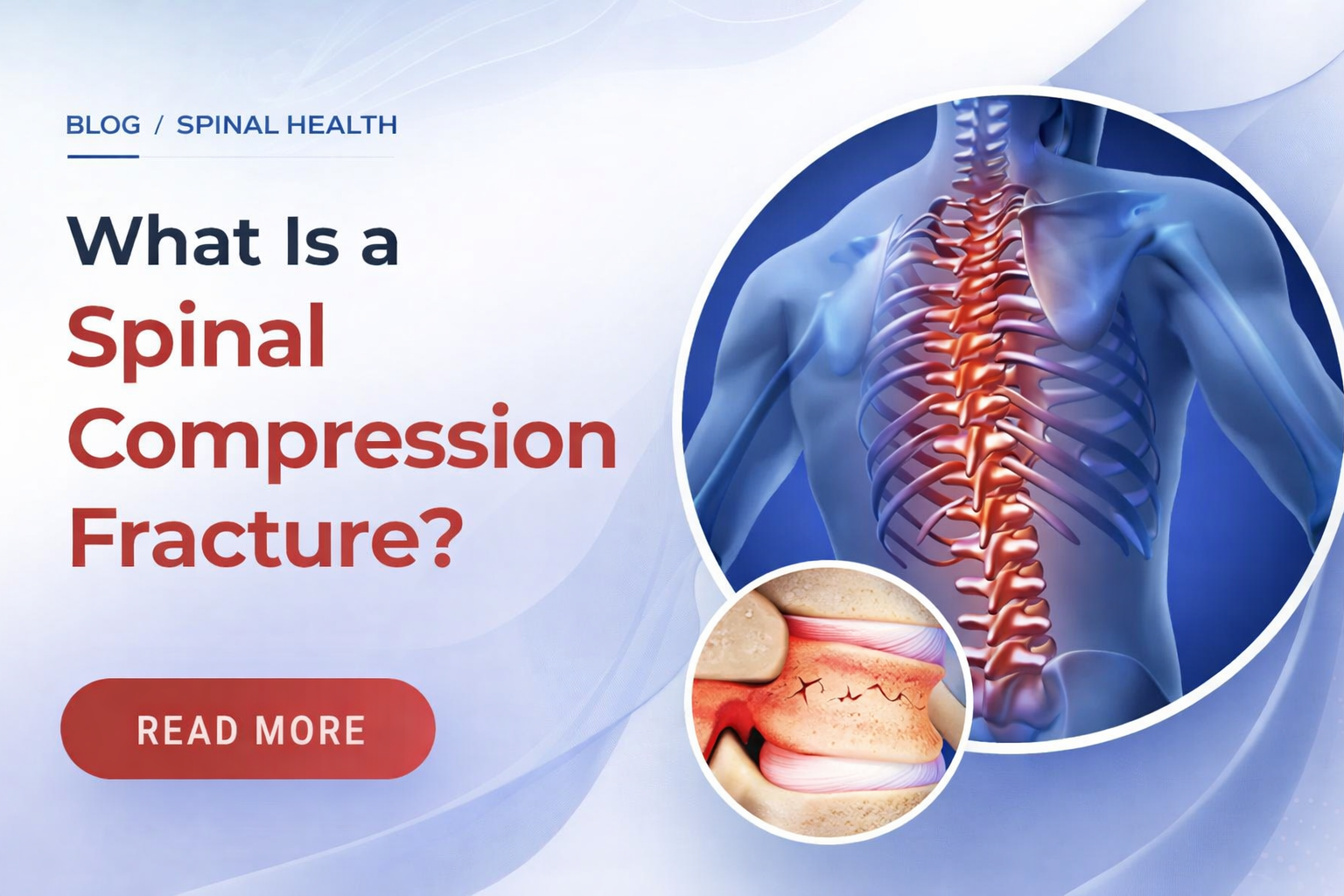
The spine is the body’s central support system, made up of 33 small bones called vertebrae. These bones protect the spinal cord and help carry the body’s weight. When one or more vertebrae weaken or face excessive pressure, they can crack or collapse — a condition known as a spinal compression fracture.
What Causes It?
Several factors can lead to spinal compression fractures:
- Osteoporosis: Weak and brittle bones increase fracture risk, even with minor strain
- Injuries or trauma: Falls, accidents, or sudden impact
- Tumors: Both cancerous and non-cancerous growths can weaken bones
- Medical conditions: Such as multiple myeloma or osteogenesis imperfecta
- Aging: Natural decline in bone density over time
- Long-term steroid use: Can reduce bone strength
Symptoms to Watch For:
Spinal compression fractures may present with:
- Sudden onset of back pain
- Pain that worsens when standing or walking
- Relief when lying down
- Limited spinal mobility
- Loss of height over time
- A stooped or hunched posture
Prevention Tips:
While not all fractures can be prevented, you can reduce your risk by:
- Maintaining a calcium- and vitamin D-rich diet
- Engaging in regular weight-bearing exercise
- Avoiding smoking and excessive alcohol
- Managing underlying health conditions
- Monitoring bone density, especially with age
When to See a Doctor:
If you experience persistent back pain, especially after a fall or minor injury, it’s important to seek medical advice. Early diagnosis can prevent complications and improve recovery outcomes.