
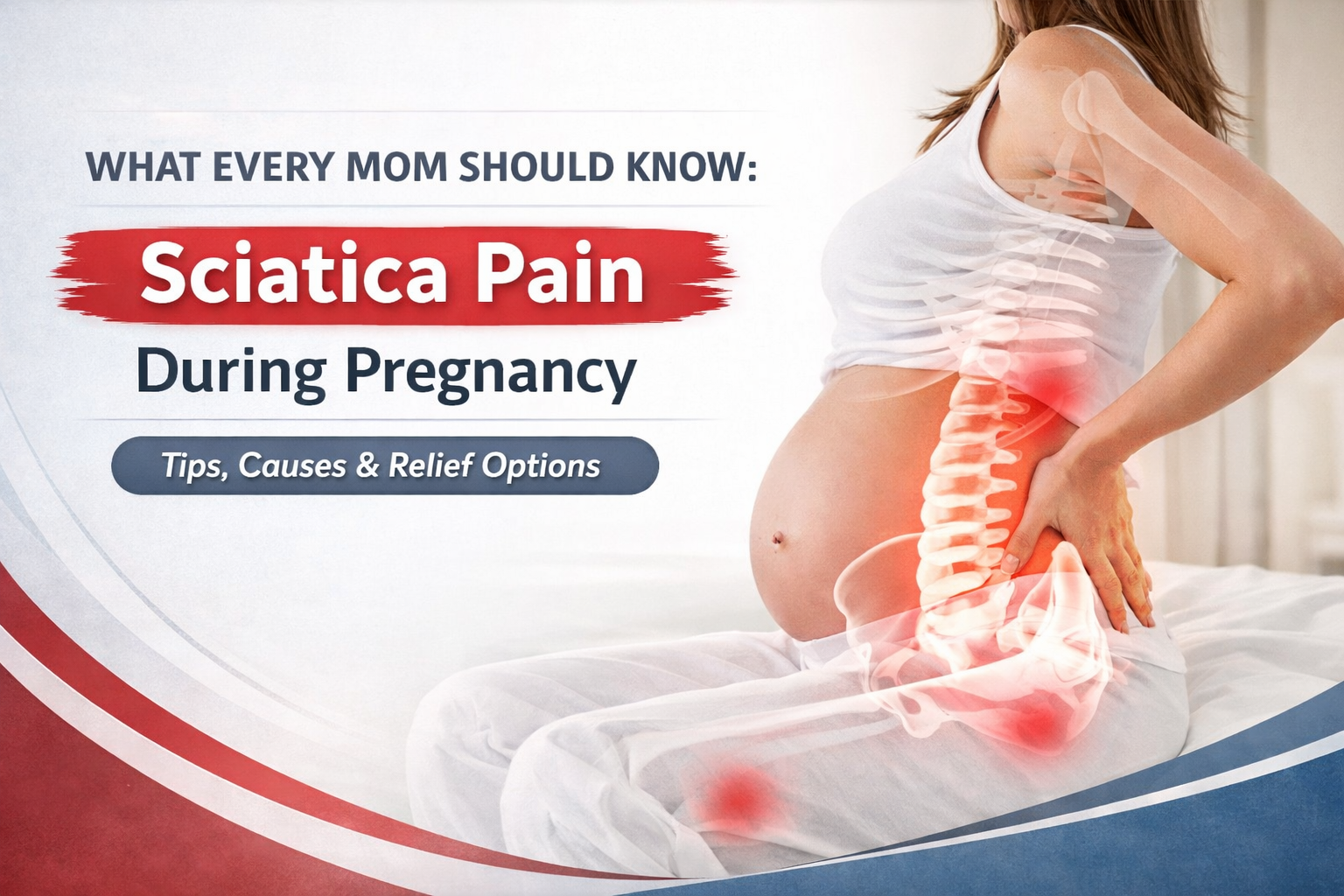
Many pregnant women experience back and leg pain at some point during pregnancy. One common cause is sciatica, a condition that occurs when the growing uterus puts pressure on the sciatic nerve. This can lead to pain that starts in the lower back and travels down one leg. The discomfort may feel sharp, burning, or tingling, and it can make everyday activities like walking, sitting, or sleeping more difficult. The good news is that in many cases, sciatica improves after delivery.
Common Symptoms
Sciatica during pregnancy usually affects one side of the body. Symptoms may include:
- Burning sensation in the lower leg
- Pain that worsens with coughing, sneezing, or sudden movement
- Pain radiating from the lower back to the buttocks and down the leg
- Tingling, numbness, or “pins and needles” in the leg or foot
If you notice these symptoms, it’s important to speak with your doctor so they can recommend safe treatment options for pregnancy.
Stretches That May Help
Gentle stretching can help relieve pressure on the sciatic nerve and relax tight muscles. Helpful options include:
- Glute and hamstring foam rolling to massage tight muscles
- Modified pigeon pose to reduce sciatica-like discomfort
- Hip flexor stretch to improve posture and reduce hip tightness
- Seated piriformis stretch to release tight buttock muscles
- Table stretch to stretch the back, hips, and legs
Always perform stretches slowly and stop if you feel pain.
Other Helpful Remedies
Along with stretching, these simple habits may ease discomfort:
- Taking warm baths to relax tense muscles
- Staying active and avoiding long periods of sitting
- Practicing good posture with proper back support
- Trying prenatal massage from a trained therapist
- Using a warm pack on the lower back or buttocks
- Using a tennis ball for self-massage to relieve tight spots
If approved by your doctor, paracetamol (acetaminophen) may help relieve pain. Avoid other medications unless specifically prescribed.
When to See a Doctor
Seek medical advice if the pain becomes severe, continues to worsen, causes weakness or numbness, affects bladder or bowel control, or interferes significantly with daily activities.
With proper care, gentle exercise, and medical guidance, most women can manage sciatica discomfort and enjoy a healthier, more comfortable pregnancy.