
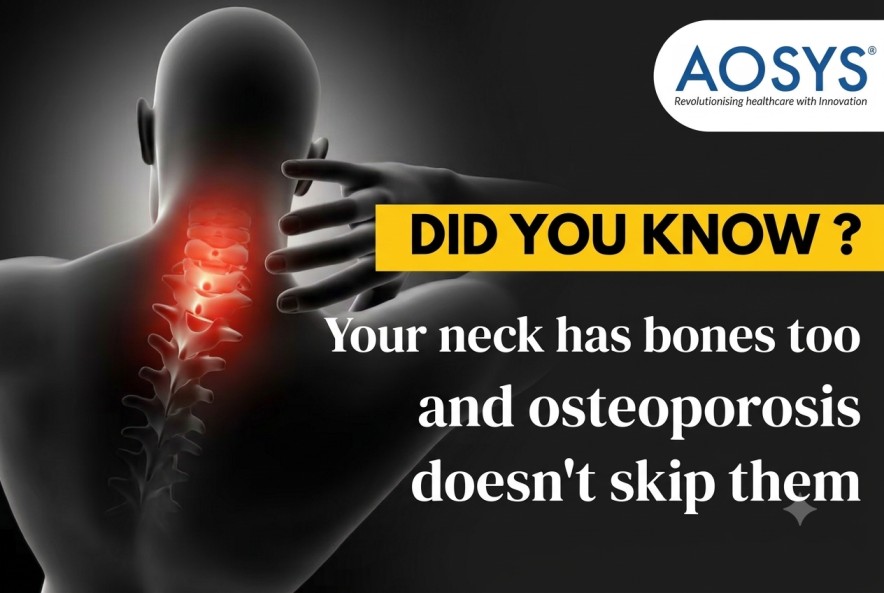
When most people picture osteoporosis, they picture fragile wrists or broken hips in older adults. Rarely do we think about our necks.
Because bone loss happens silently inside the body, it’s easy to assume certain areas are safe. But osteoporosis is a systemic condition meaning when bone density drops, it affects your entire skeleton. That includes the seven small, delicate vertebrae (C1 through C7) that make up your cervical spine.
Understanding how bone density impacts your neck and what you can do about it is essential for keeping your spine strong, mobile, and pain-free.
Why Osteoporosis Acts Differently in Your Neck
Your cervical spine carries far less weight than your lumbar spine (lower back) or hips; its primary job is supporting the weight of your head (roughly 10 to 12 pounds). Because of this lighter workload, osteoporosis in the neck rarely leads to sudden fragility fractures the way it does in the hip or lower back.
However, that doesn’t mean your neck is out of the woods.
Instead of sudden fractures, low bone density in the cervical spine typically leads to:
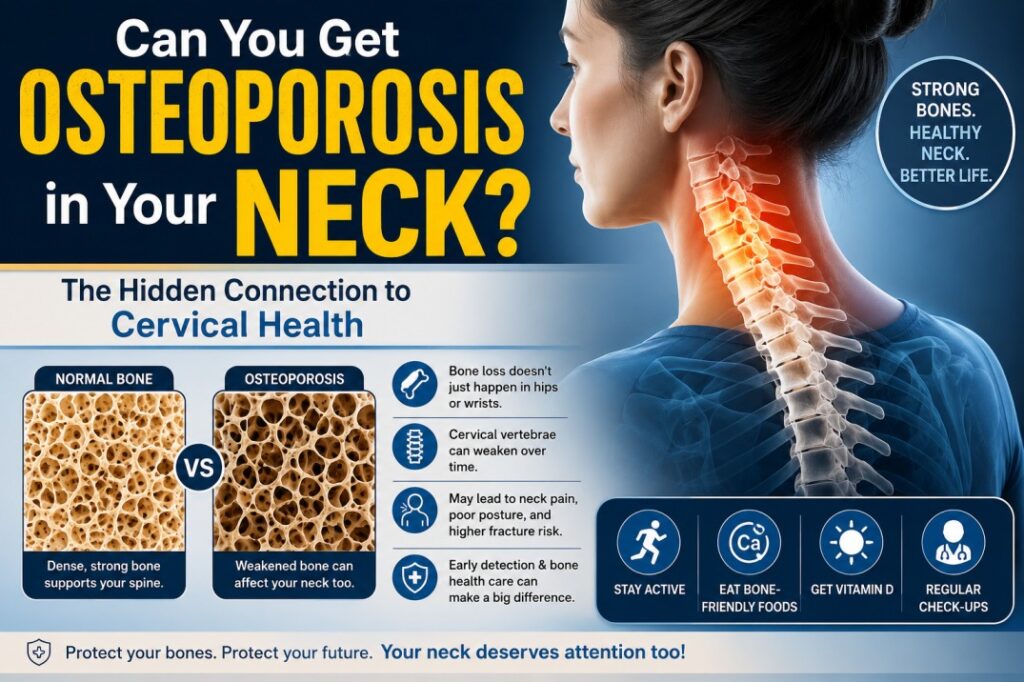
- Accelerated Degeneration: Weaker bones wear down faster under daily pressure. (Check out our quick video breakdown on how spine degeneration happens).
- Chronic Neck Stiffness: Poor structural support causes surrounding muscles and ligaments to overcompensate, leaving you feeling constantly tight.
- Persistent Neck and Shoulder Pain: As bone quality degrades, normal joint movement becomes less smooth and more prone to inflammation.
The “Text Neck” Multiplier Effect
Most of us spend hours every day looking down at smartphones, laptops, and tablets. This forward-head posture commonly called “text neck” drastically increases the effective weight your cervical spine has to support.
When you tilt your head forward at a 60-degree angle to look at a screen, your neck muscles and bones are suddenly supporting up to 60 pounds of pressure instead of 10.
When you combine low bone density with relentless daily strain, your neck becomes a slow-burn problem area. The weakened vertebrae struggle under the exaggerated load, accelerating wear-and-tear and setting the stage for long-term discomfort.
4 Ways to Protect Your Cervical Spine Today
Bone health isn’t just a conversation for later in life—protecting your spine requires proactive daily habits. Here is how you can support your cervical bones and keep your neck resilient:
1. Fuel Your Bones with Key Nutrients
Bone density relies on a steady supply of structural building blocks. Ensure your diet includes:
- Calcium: The primary mineral needed for bone strength.
- Vitamin D: Essential for helping your body actually absorb calcium.
- Protein: Provides the structural matrix for bone tissue and supports the muscles holding up your neck.
2. Mind Your Posture (Especially on Screens)
Bring your phone up to eye level instead of bending your neck down. When working at a desk, adjust your monitor so the top third of the screen aligns with your eye line. Small ergonomic tweaks relieve massive amounts of physical stress off your cervical vertebrae.
3. Build Strength with Weight-Bearing Exercise
Bone responds to force by getting stronger. Regular weight-bearing activities (like walking, hiking, or light resistance training) stimulate bone-building cells across your whole body, helping slow down systemic bone loss.
4. Don’t Ignore Persistent Neck Stiffness
Occasional tightness after a long work day is normal, but ongoing stiffness, sharp pain, or numbness radiating down your arms is not. If your neck consistently feels tight or painful, seek a professional medical evaluation to check both your posture and underlying bone health.
Protecting your spine starts with knowing what’s happening beneath the surface. By combining solid nutritional habits, proper everyday ergonomics, and regular health check-ups, you can keep your cervical spine strong and pain-free for years to come.
What is one daily habit you can tweak today like raising your phone or adding a quick neck stretch to give your cervical spine a break?