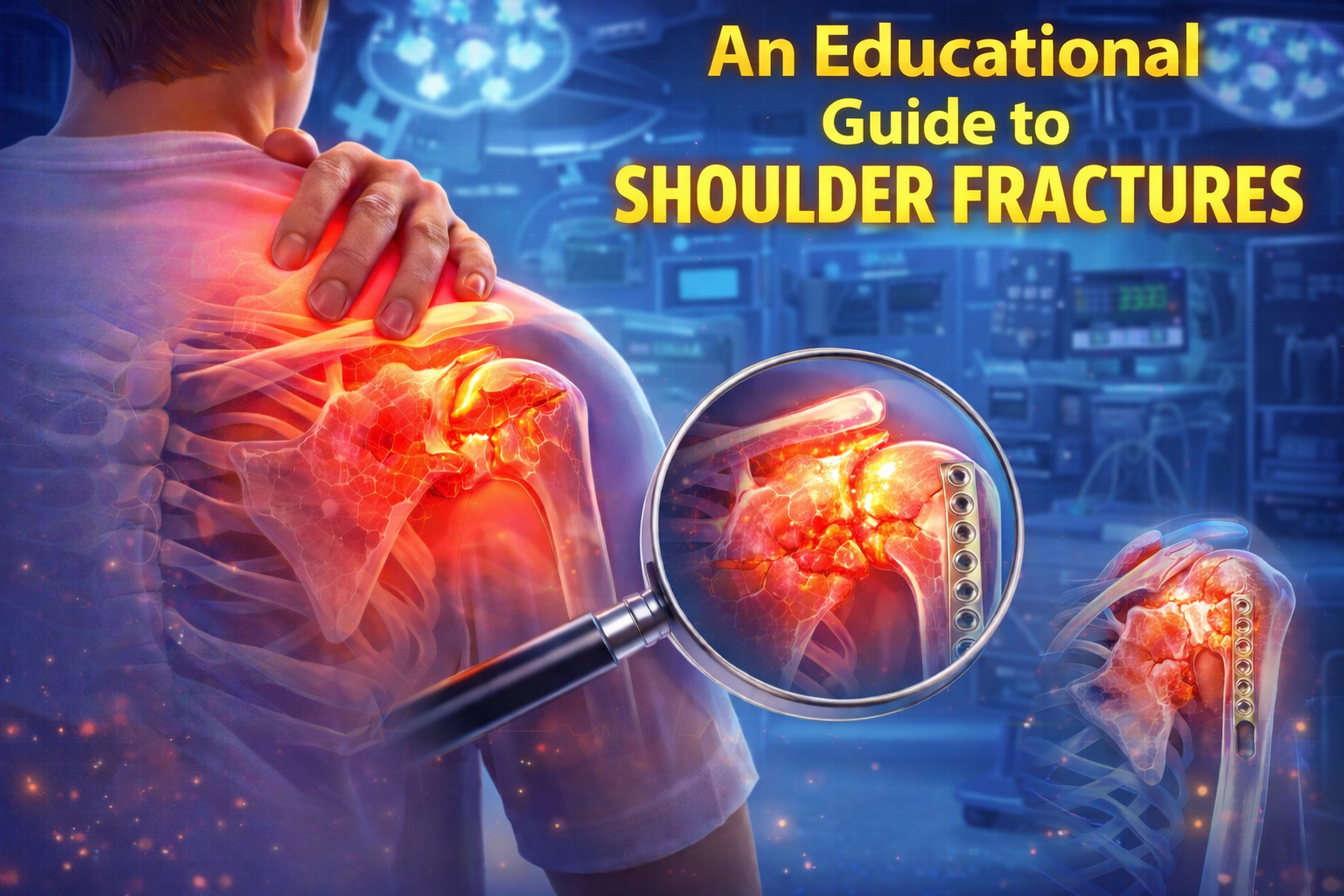
What Are Shoulder Fractures?
Your shoulders are among the most mobile joints in the body, allowing you to lift, rotate, and reach in almost every direction. This flexibility comes from two key joints: the acromioclavicular (AC) joint—where the collarbone meets the shoulder blade—and the glenohumeral joint, the ball-and-socket joint that connects the upper arm to the shoulder blade. Because of this complex structure and wide range of motion, the shoulder is also vulnerable to injury—especially fractures.
A shoulder fracture happens when one of the three main bones that form the shoulder joint breaks: the clavicle (collarbone), the proximal humerus (upper arm bone near the shoulder), or the scapula (shoulder blade).
Types of Shoulder Fractures:

1. Clavicle Fracture
A break in the collarbone, often caused by falls, sports injuries, or motor vehicle accidents. It’s one of the most common shoulder fractures and may cause a visible bump at the injury site.
2. Proximal Humerus Fracture
This affects the upper part of the arm bone near the shoulder joint. It often occurs from direct trauma or falls and may involve the “ball” of the ball-and-socket joint.
3. Scapula Fracture
The shoulder blade is a strong bone, so fractures usually result from high-impact trauma such as car accidents or severe sports injuries.
Common Symptoms:
Shoulder fractures are typically painful and may include:
- Severe shoulder pain
- Swelling and bruising
- Tenderness to touch
- Visible deformity or bump
- Discoloration around the upper arm
- Difficulty or inability to move the arm
What Causes Shoulder Fractures?
The most common causes include:
- Falls
- Automobile accidents
- Contact sports injuries
- Direct blows to the shoulder