
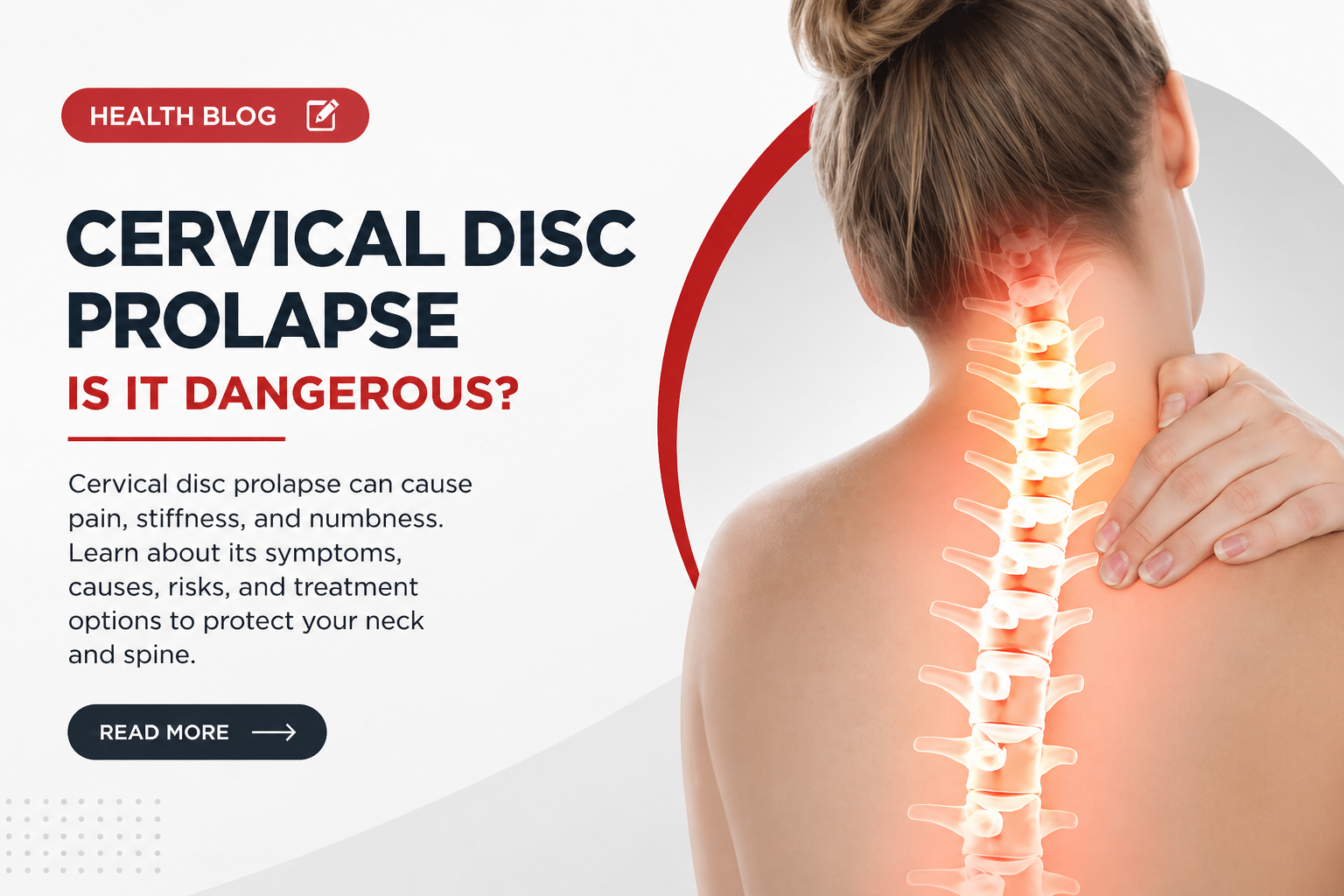
The cervical spine consists of seven vertebrae (C1–C7) that form the neck portion of your spine. Its primary role is to support the head and protect the spinal cord—a vital pathway that carries signals between your brain and the rest of your body.
Between each vertebra lies a soft, gel-like disc that acts as a cushion. These discs absorb shock and allow your neck to move smoothly in different directions.
What Is Cervical Disc Prolapse?
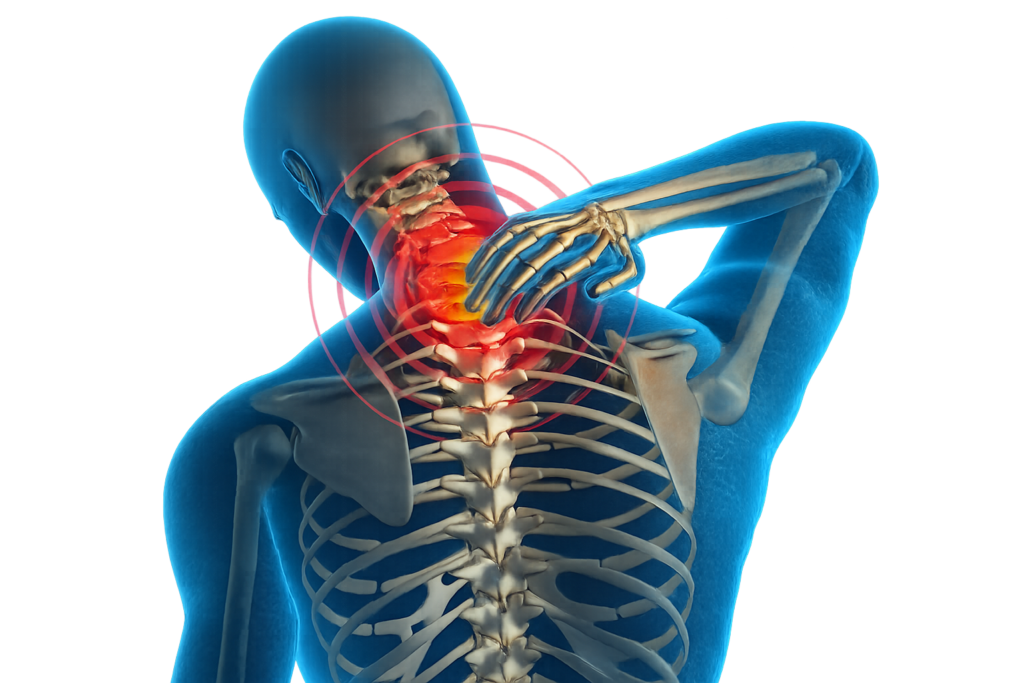
Cervical disc prolapse—commonly referred to as a slipped or herniated disc—occurs when the inner gel-like material of a spinal disc pushes through a tear in its outer layer. When this happens, the protruding disc can press on nearby nerves in the neck, leading to discomfort and other neurological symptoms.
Is It Dangerous?
In most cases, cervical disc prolapse is not life-threatening and improves with conservative treatment over time. However, certain complications can arise if the condition is severe or left untreated:
- Long-term nerve damage
- Difficulty with coordination or walking (if the spinal cord is compressed)
- Persistent numbness, tingling, or weakness in the arms
⚠️ These symptoms require immediate medical attention.
Causes:
Cervical disc prolapse can occur due to a combination of factors:
- Age-related degeneration: Discs lose hydration and elasticity over time, making them more prone to injury
- Heavy lifting or sudden strain: Poor lifting techniques or abrupt movements can stress the spine
- Smoking and occupational strain: Reduced blood supply and repetitive physical stress accelerate disc wear
- Genetic factors: A family history of spinal issues may increase susceptibility
- Injury or trauma: Accidents, falls, or direct impact to the neck can trigger disc damage
Symptoms to Watch For:
While symptoms vary, common signs include:
- Neck pain or stiffness
- Pain radiating to the shoulders or arms
- Numbness or tingling in the hands
- Muscle weakness in the upper limbs
- Reduced range of motion
Treatment Options:
Conservative Treatments
Most individuals recover within a few weeks using non-surgical approaches:
- Rest and activity modification
- Ice or heat therapy
- Physical therapy and targeted exercises
- Pain relief medications and anti-inflammatory drugs
- Steroid injections (in selected cases)
Surgical Treatments
Surgery is considered when symptoms are severe, persistent, or worsening despite conservative care. Options may include:
- Discectomy (removal of the affected disc portion)
- Spinal fusion
- Artificial disc replacement