
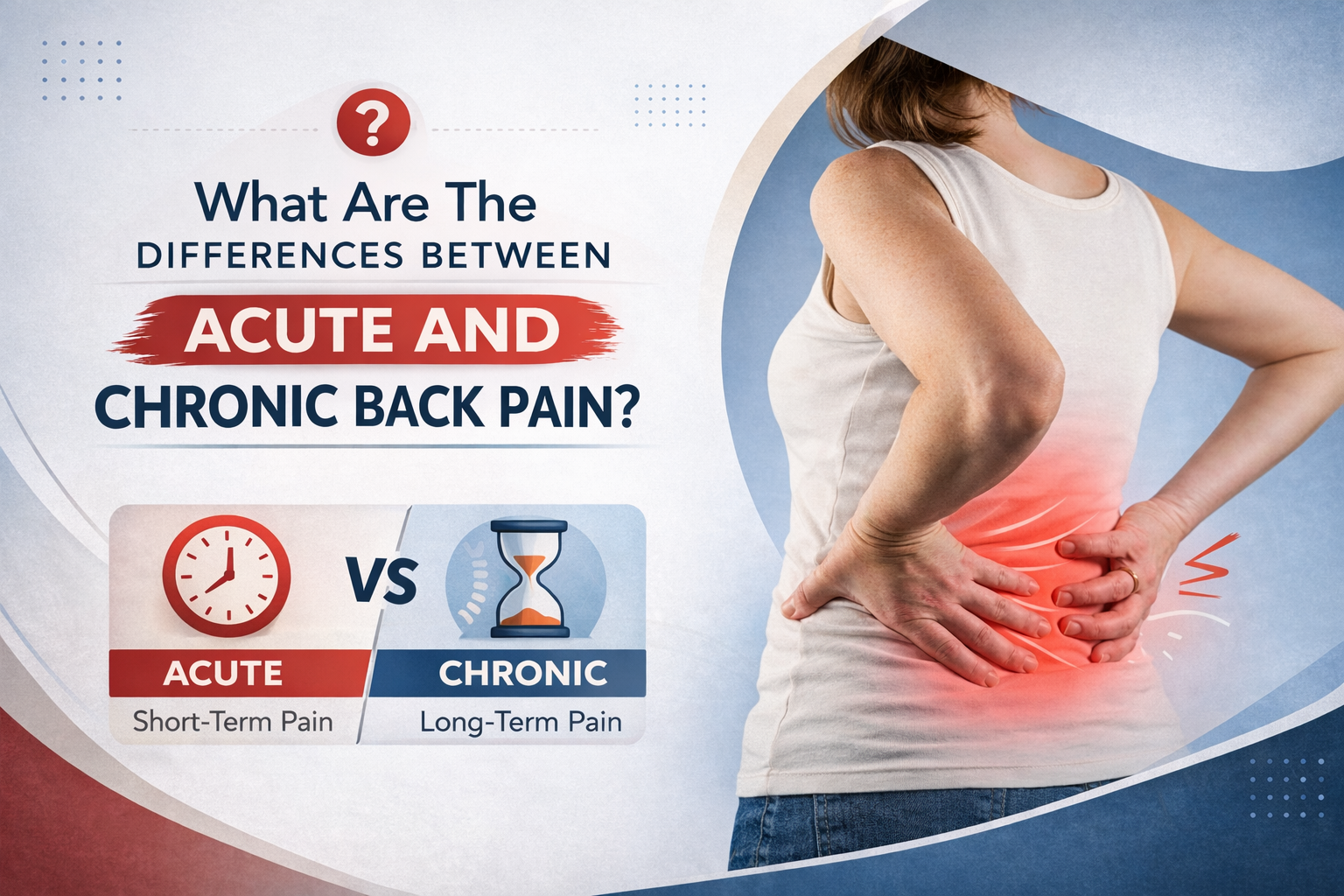
Back pain is one of the most common health issues faced by people today, and it affects millions of Indians every year. Whether it appears suddenly or develops gradually over time, back pain can interfere with daily activities, work, and overall quality of life. Understanding the difference between acute and chronic back pain, along with their causes and treatment options, can help individuals seek the right care at the right time.
What Is Acute Back Pain?
Acute back pain occurs suddenly and is usually linked to a specific injury or strain. This type of pain typically lasts for a short period, ranging from a few days to several weeks, and most cases improve as the body heals.
Acute back pain often results from damage to the soft tissues of the back, such as muscles, tendons, or ligaments. It may happen after lifting heavy objects improperly, making sudden movements, or experiencing muscle spasms.
Common causes of acute back pain include:
- Muscle sprain or strain
- Surgical procedures
- Fractured bones
- Sudden disc (annular) tear
- Labor and delivery
Although acute back pain is temporary, proper rest, care, and medical advice can help prevent the problem from becoming more serious.
What Is Chronic Back Pain?
Chronic back pain develops gradually and persists for a longer duration. It is generally defined as pain that lasts for three months or longer, or pain that recurs over a period of six months or more. Unlike acute pain, chronic back pain is often linked to structural or degenerative changes in the spine.
The severity of chronic back pain may increase over time and may require ongoing management.
Common causes of chronic back pain include:
- Disc degeneration
- Age-related degenerative arthritis
- Chronic disc herniation
- Compression fractures
- Chronic pain conditions such as fibromyalgia
Because chronic back pain can significantly affect mobility and lifestyle, early diagnosis and proper treatment are essential.
When to See a Doctor
Back pain should never be ignored, especially if it persists, worsens, or interferes with daily life. Early consultation with a healthcare professional can help identify the cause and prevent further complications.
Whether the pain is acute or chronic, taking timely action and following a proper treatment plan can significantly improve back health and overall well-being.