
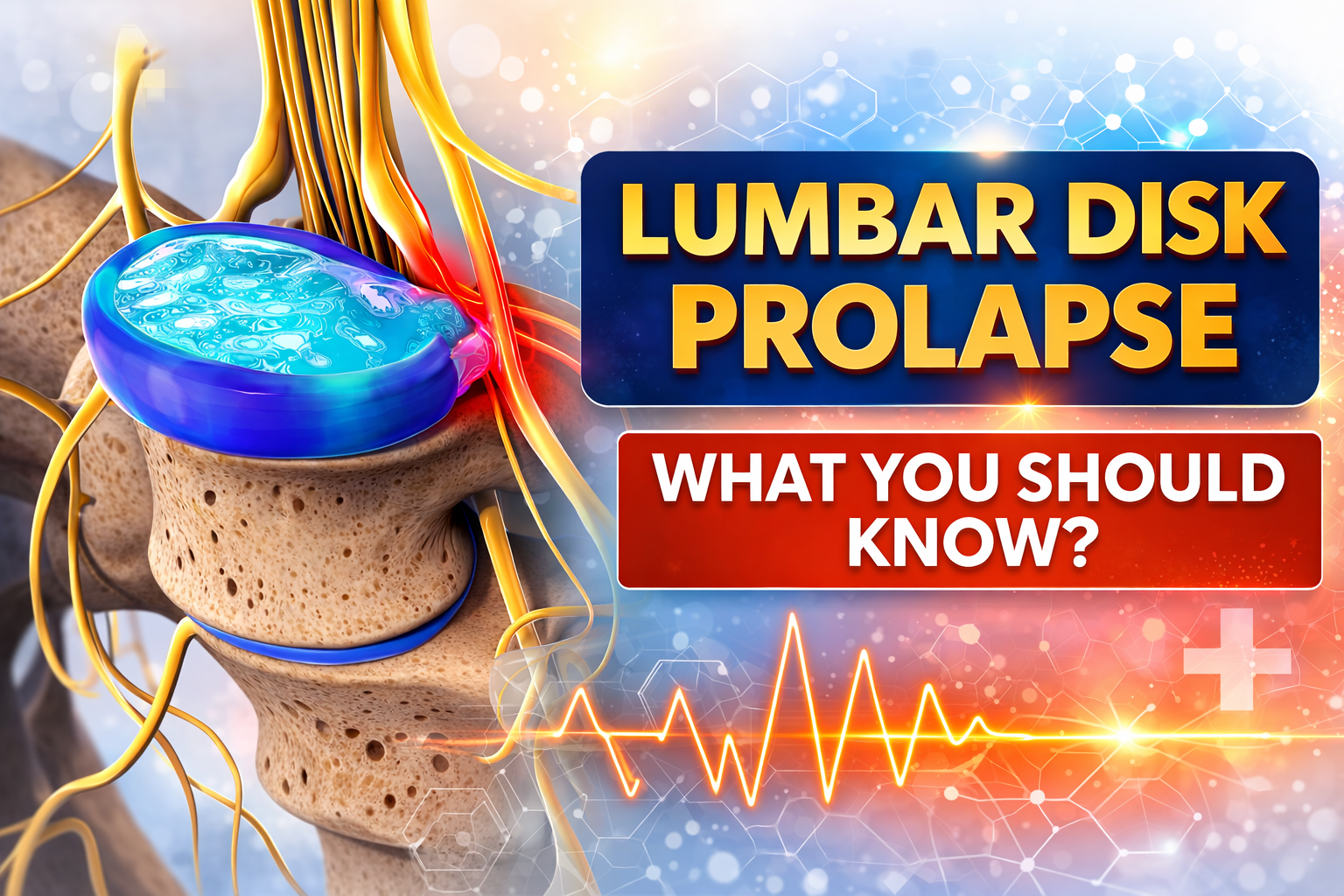
The spine, or vertebral column, is made up of 33 small bones called vertebrae. Between these bones are soft, gel-like discs that act as cushions and shock absorbers. These discs allow the spine to move smoothly while supporting body weight—especially in the lower back, known as the lumbar spine.
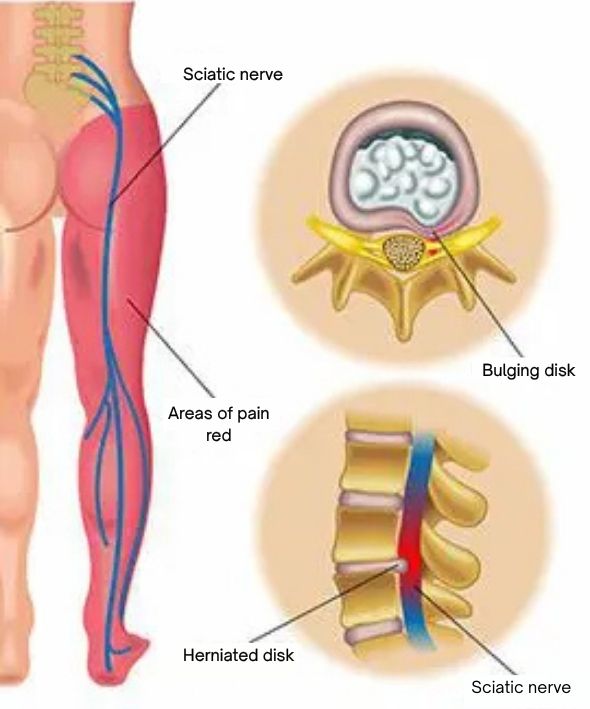
A lumbar disc prolapse, commonly called a herniated or slipped disc, occurs when the soft inner part of a disc pushes through a tear in its tough outer layer. This condition most often affects the lower back, particularly between the L4–L5 or L5–S1 vertebrae. When the disc bulges outward, it can press on nearby nerves, leading to pain and other uncomfortable symptoms.
What Causes a Lumbar Disc Prolapse?
Several factors can contribute to this condition:
- Age-related wear and tear (disc degeneration)
- Sudden injury, accidents, or heavy lifting
- Repeated strain or poor posture
- Increased pressure on the spine
While disc degeneration is common as we age, early diagnosis and treatment can prevent long-term complications.
Common Symptoms:
Symptoms depend on which disc and nerve are affected, but may include:
- Persistent or occasional lower back pain
- Pain radiating down the leg (sciatica)
- Numbness or tingling in the legs or feet
- Muscle spasms in the back
- Weakness in the lower limbs
- Reduced knee or ankle reflexes
- Pain that worsens with movement, coughing, or sneezing
In rare and severe cases, changes in bowel or bladder function may occur. This requires immediate medical attention.
When to See a Doctor
Because other conditions can mimic the symptoms of a slipped disc, it’s important to consult a healthcare professional for accurate diagnosis and timely treatment. With proper care—including rest, physiotherapy, medication, or in some cases surgery—most people recover well and return to normal activities.
Taking care of your spine through good posture, regular exercise, and safe lifting techniques can go a long way in preventing lumbar disc problems.