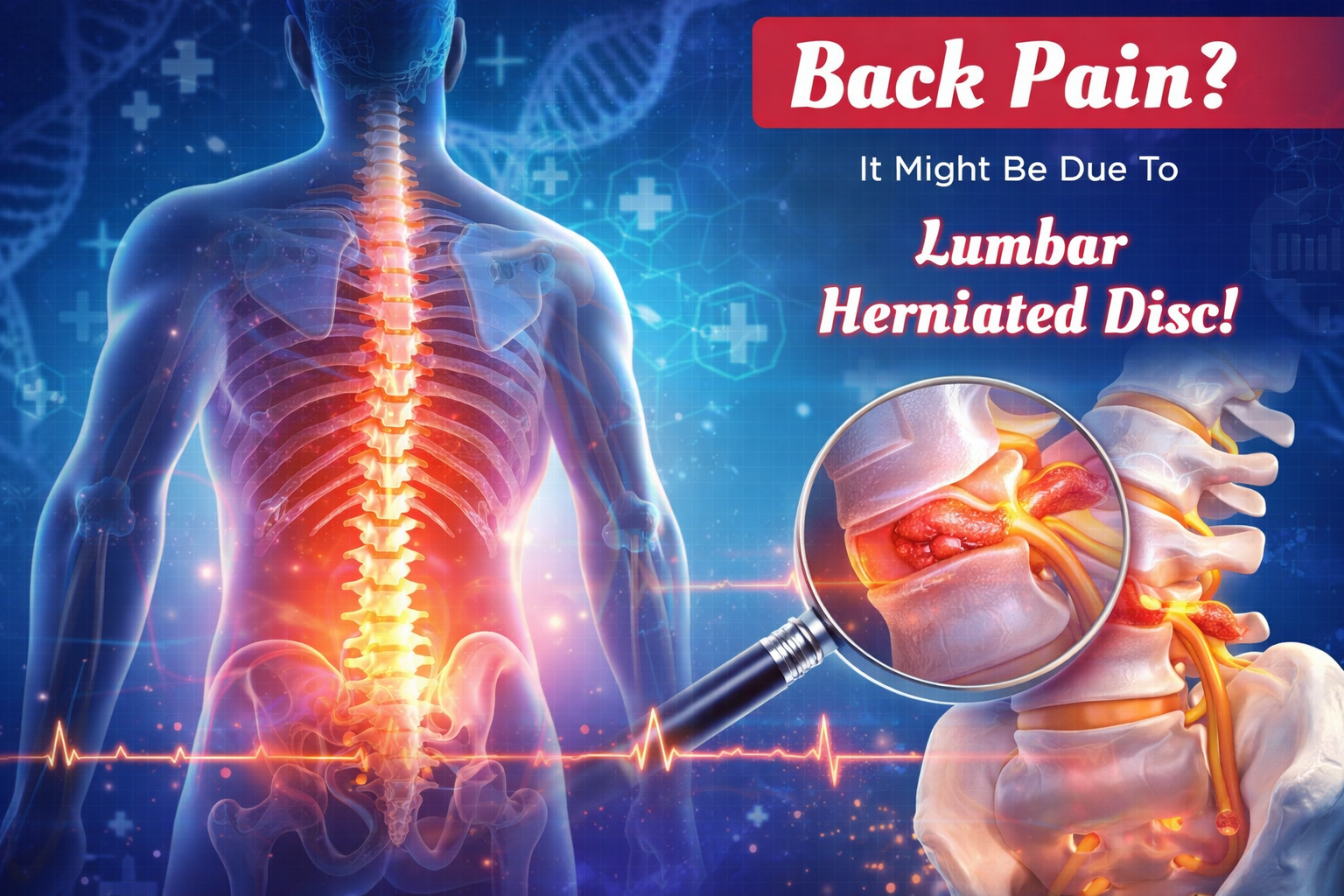
Back pain can strike without warning—one moment you’re sitting comfortably, and the next you feel a sharp pain shooting through your lower back. One common cause of this sudden discomfort is a lumbar herniated disc, often referred to as a slipped disc.
This condition most frequently affects adults between the ages of 35 and 50 and is widely known for causing sciatica, a type of nerve pain that radiates down the leg.
What Is a Lumbar Herniated Disc?
Your spine is made up of small bones called vertebrae, which are cushioned by soft, rubbery discs that act as shock absorbers. Each disc has two main parts:
- Nucleus pulposus – a soft, gel-like center
- Annulus fibrosus – a tough outer ring that holds the disc together
When the outer ring weakens or tears, the inner gel can push outward (herniate) and press on nearby nerves. This nerve compression causes pain, numbness, or tingling—most commonly in the lower back and legs.
If the herniation occurs in the cervical spine (neck region), symptoms may affect the shoulders and arms instead.
Common Symptoms:

A lumbar herniated disc may cause:
- Muscle weakness
- Pain on one side of the body
- Numbness or tingling sensations
- Lower back pain radiating to the leg (sciatica)
- Pain that worsens with prolonged sitting or standing
In more severe cases, symptoms may interfere with walking, daily activities, or sleep.
What Causes a Herniated Disc?
Herniated discs often develop gradually as part of the natural aging process. Over time, spinal discs lose water content, making them less flexible and more prone to tearing.
Other risk factors include:
- Poor posture
- Obesity
- Smoking
- Lack of regular exercise
- Improper lifting techniques
- Sudden injury or trauma
- Genetic predisposition
Lifestyle habits play a significant role in both prevention and recovery.
Treatment Options:
- Most cases improve without surgery. Common nonsurgical treatments include:
- Rest and anti-inflammatory medications
- Physiotherapy and guided exercises
- Stretching and core strengthening
- Heat or ice therapy
- Epidural steroid injections
Surgery is usually considered only if symptoms persist despite conservative treatment. Minimally invasive procedures like microsurgery are often effective when needed.