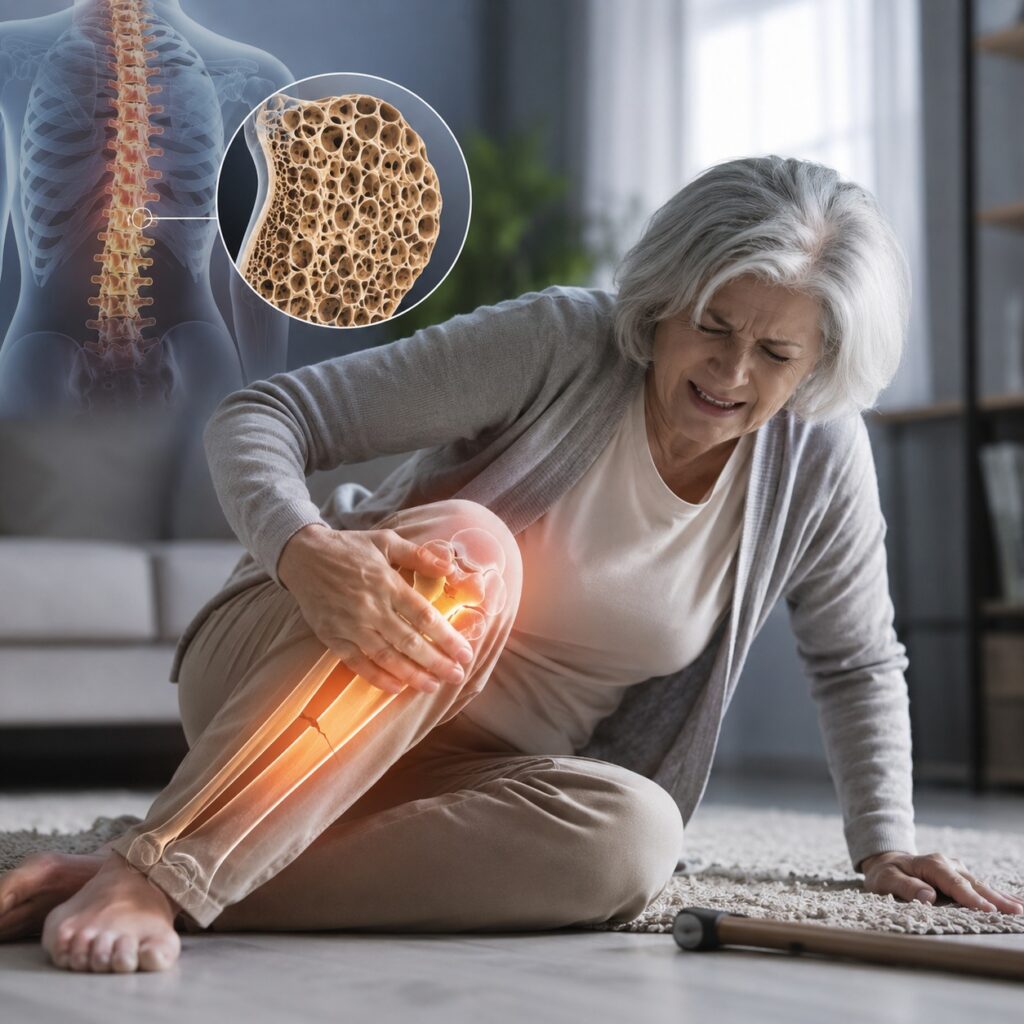
A simple fall may not seem like a big deal but if you have osteoporosis, it can be.
Osteoporosis gradually weakens your bones, making them more fragile and vulnerable to fractures. In many cases, even a minor fall, sudden twist, or low-impact injury can result in a broken bone that wouldn’t normally occur in someone with healthy bone density. Because osteoporosis is often called the “silent disease,” many people don’t realize they have it until a fracture happens.
Why Bone Health Matters
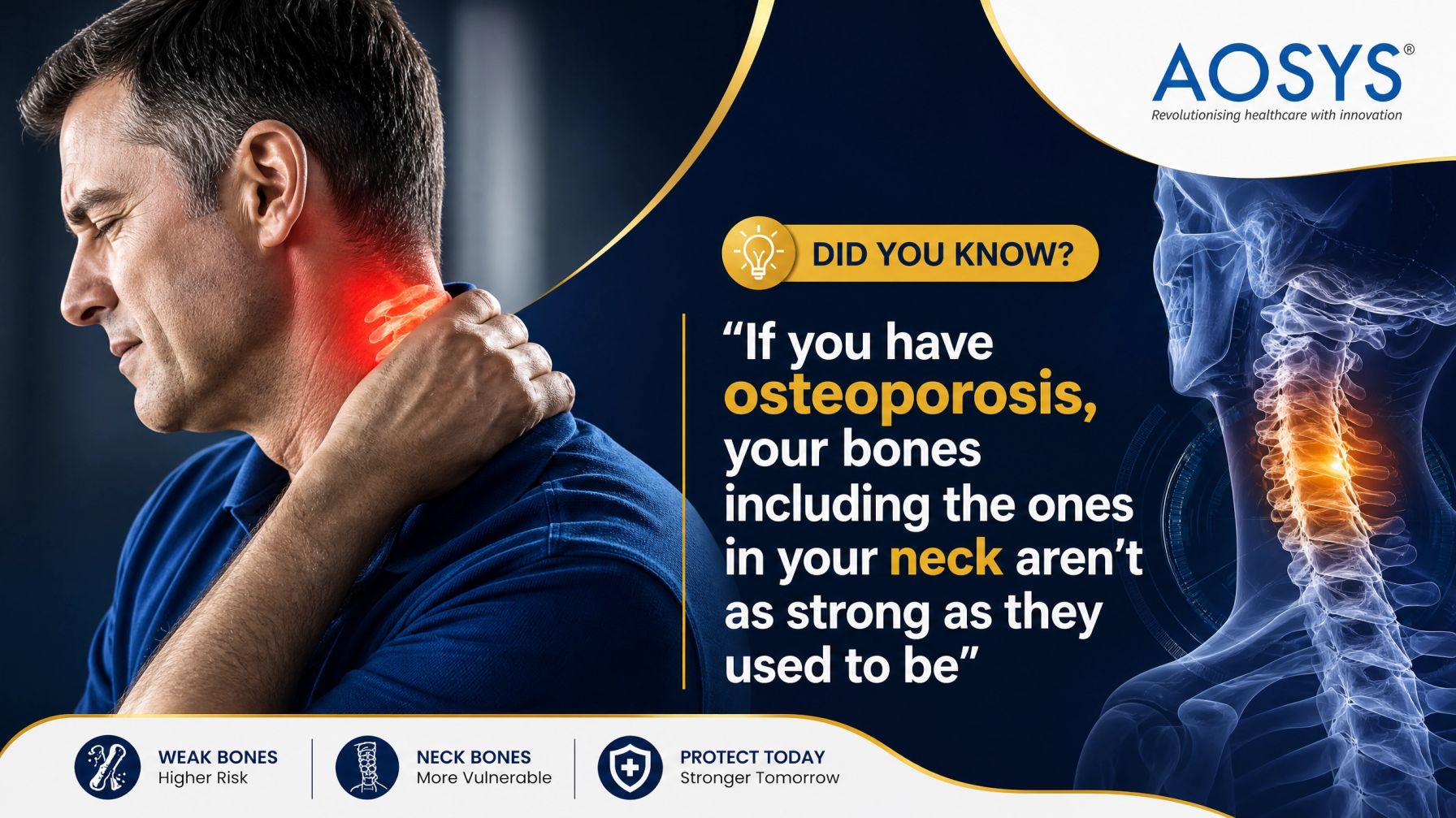
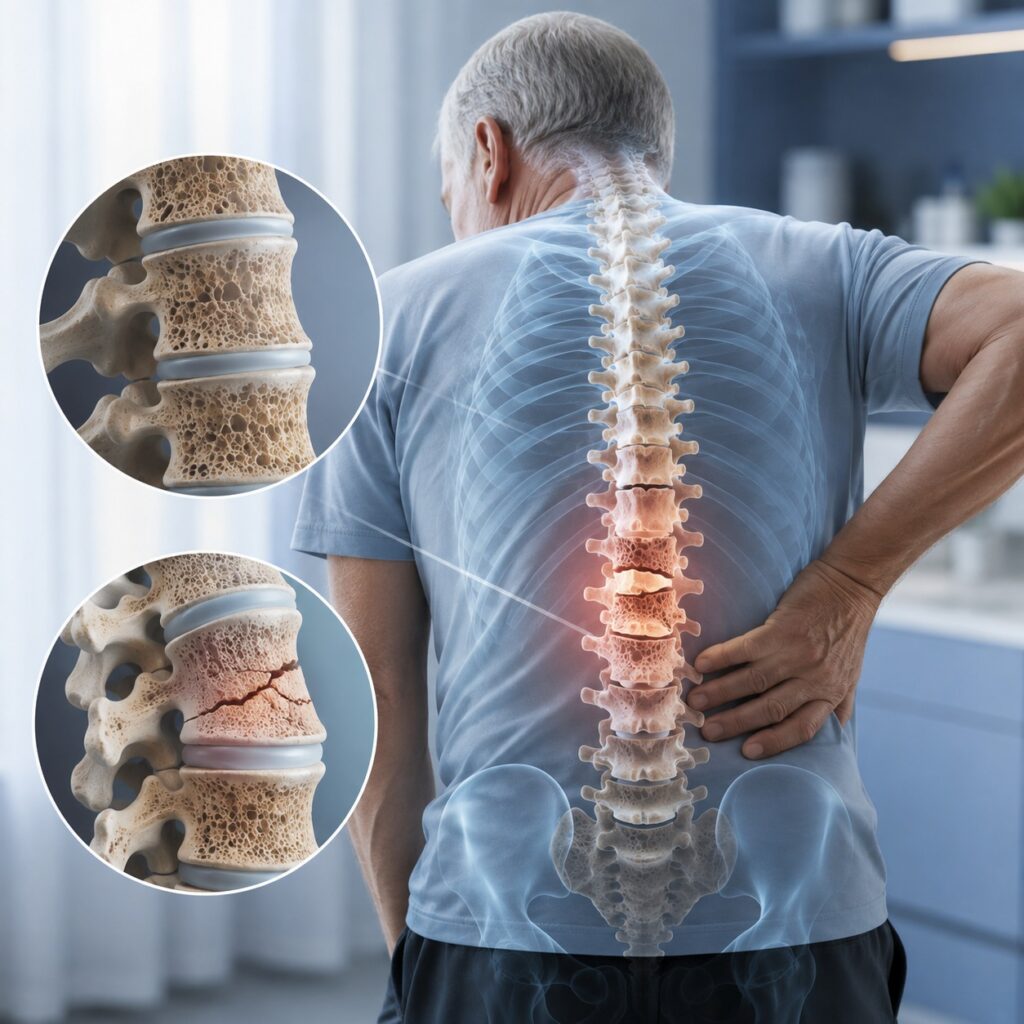
Your spine is made up of small bones called vertebrae that support your body and protect the spinal cord. Healthy bones help absorb everyday stress and movement. When bone density decreases, the vertebrae become more susceptible to fractures, especially after seemingly minor trauma. While osteoporotic fractures are more common in the thoracic and lumbar spine, weakened bones anywhere in the skeleton deserve attention.
You May Be at Higher Risk If You:
✔ Have been diagnosed with osteoporosis or osteopenia
✔ Are postmenopausal or over the age of 50
✔ Have experienced a previous fragility fracture
✔ Have a family history of osteoporosis
✔ Take long-term corticosteroid medications or have other risk factors for bone loss
Protect Your Bones Before a Fall Happens
• Small lifestyle changes can significantly reduce your risk of fractures:
• Keep your home fall-safe with non-slip mats, adequate lighting, and clutter-free walkways.
• Stay physically active with exercises that improve strength, balance, and bone health.
• Get a bone mineral density (BMD) test if you’re at increased risk.
• Speak with your healthcare provider about calcium, vitamin D, and osteoporosis management if appropriate.
The Bottom Line
Not every fall can be prevented but many osteoporosis-related fractures can. Understanding your risk, maintaining healthy bones, and taking preventive steps today can help protect your mobility and independence tomorrow.
At AOSYS, we believe that better orthopedic outcomes begin with awareness. Through continuous innovation in orthopedic implants and educational initiatives, we are committed to supporting healthcare professionals and promoting informed bone health for better patient care.
Know someone who could benefit from this information? Share this post and help spread awareness.
Disclaimer
This content is intended for general educational purposes only and should not be considered medical advice. Please consult a qualified healthcare professional for personalized diagnosis and treatment.